

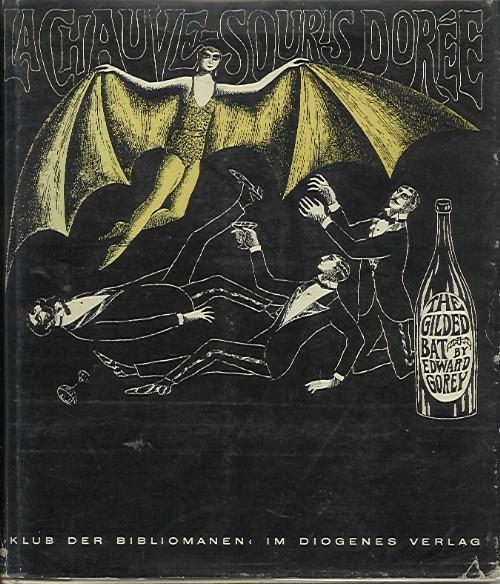
 Conversation The First
Scene: Sultry summer night in mid-July. Heavily pregnant woman rushes into bedroom and quickly and gracelessly heaves herself onto bed where man is deep in sleep, quietly snorkeling.
Woman: (not even trying to be quiet) BAT!
Man: Huh…? Ung…?
Woman: A BAT! A BAT! IN OFFICE! BAT! BAT! BAT!
Man: Zzzzzzz…wha…? Bunt?
Woman: (pounds on man's chest with both fists) BAAAAAAAAAAT!
Man: (man jumps up and sprays a string of drool across the wall) Bat…?
Woman: BAT!
Man: Bat?
Woman: BAT! FLY! BAT!
Man: (becomes instantly alert and strikes noble pose of ninja flapping arms madly about head to deflect a bat) Where?! WHERE?!
Woman: NO! THERE! THERE! THERE!
Man: GO! GO! SHOW BAT!
Woman: COME! BAT! GO! SHOW BAT!
Exit room a la Three Stooges.
Conversation the Second
Scene: Same night. Hallway of house. Dim light. Heavily pregnant woman and the man are standing outside the door to home office. Both stare intently at the door.
Man:
Woman:
Man:
Woman: It’s in there.
Man:
Woman:
Man:
Woman: Did you hear what I -
Man: Yes! Yes! I heard you!
Woman:
Man:
Woman: Well?
Man: I’m thinking.
Woman: The cat’s in there, too.
Man: Hmmmm.
Woman: Yes?
Man: Maybe the cat will kill the bat.
Woman: Good. Yes.
Man: Okay. Good. Yes.
Woman: Good.
Man: Yes.
Woman:
Man:
Woman: What if the bat has rabies?
Man:
Woman: I said -
Man: Okay! I heard you!
Woman: Because then the cat -
Man: Yeah! Okay, I get it!
Woman:
Man:
Woman: So……?
Man: I know what to do.
Woman: Yes! What to do?
Man: Go. Get me a big box, a roll of duct tape, a flashlight, a large hat, and a shot of whiskey. Go. Go. Go.
Woman: A shot of…?
Man: Fortification.
Woman: Right! Got it! I’m going!
Conversation The Third
Voice on phone: Good morning. Game Commission.
Woman: We have a bat in our house. Please come get it.
Voice on phone: M’am, you said you have…a bat?
Woman: Yes. A bat. Come get it now, please.
Voice on phone: A live bat? Or is it dead?
Woman: Well, I think it’s still alive.
Voice on phone: Where is it right now?
Woman: It’s in a bookcase.
Voice on phone:
Woman: It’s in a bookcase.
Voice on phone: A bookcase…
Woman: Yes. The cat cornered the bat in the bookcase and we sealed the bat in with an empty Girl Scout Thin Mint Cookie carton.
Voice on phone:
Woman: And duct tape.
Voice on phone: So it might still be alive. You don’t know.
Woman: No.
Voice on phone: Could you go see if the bat is alive?
Woman: No.
Voice on phone: Okay. We’ll send an officer over right now to get the bat.
Woman: Thank you. I’ll pour the whiskey.
Conversation The Fourth
Different Voice on Phone: Hello. Department of Agriculture Laboratory. How can I help you?
Woman: Hello. I just spoke with an officer from the Game Commission who said that he would be dropping off a bat at your labs for rabies testing.
Lab Guy: Hmmm. A bat you say?
Woman: Yes. He caught the bat in our house early this morning and said that he was bringing it directly to the lab for testing. See, our cat was locked in a room with the bat and we don’t know whether the bat bit the cat but then while I was trying to catch the cat that was with the bat, the cat bit me, and now the bat needs to be tested.
Lab Guy: The bat bit you?!
Woman: No. The cat did.
Lab Guy: And the cat is here now?
Woman: Bat. Not cat.
Lab Guy: In French chat-chapeau?
Woman: No. In French chauve-souris.
Lab Guy: Got it!
Woman: The bat?
Lab Guy: No. There’s no bat here.
Woman: Okay, uhm, no. You’re wrong. There is a bat there. The guy from the Game Commission told me that this is the only lab in the area and you would have the bat lickety split.
Lab Guy: Well, I’ll tell you what. If your bat comes in, I’ll call you immediately.
Woman: You will?
Lab Guy: Oh yes! Bats. Serious business. You know, a rabid bat could bite you or your children while you’re all sleeping and you’d never know it. You’d be dead in a month without knowing what hit you.
Woman:
Lab Guy: You still there?
Woman: Yes. I was just pouring myself a shot of whiskey.
Lab Guy: That's the spirit! I’ll call you later.
Conversation The Fifth
Voice on Phone: Hello, Game Commission.
Woman: I’ve spoken with the lab five times today and still no bat.
Voice on Phone: Excuse me?
Woman: I called about a bat today. Your guy came and extracted a bat from my house and told me he brought it to the lab for testing.
Voice on Phone: Oh yes, I remember you now.
Woman: Well, the lab doesn’t have the bat.
Voice on Phone: Just one second.
Woman:
Woman:
New Voice on Phone: Hello! You’re the lady with the bat! I was by your house today. Real nice bat you had there.
Woman: Now see here! I’ve called the lab a few times today and they told me no bat!
Officer: No bat, hmmm?
Woman: Yes! No bat! What do you have to say about this?
Officer: Well, I wasn’t going to tell you, because I figured you’d be real upset. But, I let the bat go.
Woman: YOU WHAT?
Officer: Yeah, see, I was in the parking lot and I put the bat on the ground before I was going to kill it…
Woman: YOU WHAT?
Officer: …and it flew away.
Woman: IT FLEW AWAY?
Officer: Durndest thing, too. A bat flying away like that….
Woman: IT FLEW AWAY?
Officer: Yep. Just flew away over the tree tops.
Woman: IT FLEW AWAY?
Officer: Who’da thunk it?
Woman: IT HAS WINGS! WOULDN’T THAT BE A FIRST CLUE?!
Officer: Ah, now don’t you go gettin’ all worried like. It looked real healthy, a bat like that. If you're askin’ me, I’ll tell you I seen plenty of sick bats and that bat didn’t look sick as far as I could tell. Flying away, free as can be….
Woman: I wanted it tested for rabies! I wanted cold hard science all over this, not some touchy-feely eyeball analysis from Mister Born Free emancipator of bats!
Officer: Ah whelp, I’m just sorry as all get out about your bat.
Woman: YOU'RE SORRY? SORRY?
Officer: Yep. Won’t happen again, I promise. Okay now, you have a good ole day, ya hear?
Woman: !!!
Conversation The Sixth
Woman: Uhmmm, Honey?
Man on phone: Yes.
Woman: You’ve never happened to be vaccinated for rabies, have you?
Man on phone: What?
Woman: Vaccinated for rabies. You know. Like maybe when you were little you were playing with a raccoon….
Man on phone: No. No, I never played with raccoons.
Woman: Okay, well then, the Department of Health says we all need to go start rabies shots.
Man on phone: WHAT?
Woman: I know this sounds crazy, but they followed up after the Game Commission’s bat report and I told them what happened and that they let the bat go and now we don’t know whether it was positive or negative for rabies and that the bat was in the house while we were sleeping and that all our bedroom doors were open they said that bats can bite you in your sleep and you’d never know it and it’s bad.
Man:
Woman: It happened to a kid in Texas this past May.
Man: Sigh
Woman: Yeah…so…we have to go to the Emergency Room because that’s the only place they have the shots.
Man: Can’t they just like, check us for bites or something?
Woman: Well the woman at the CDC said…
Man: The CDC?
Woman: Yes, the Center for Disease Control in Atlanta. It’s speed dial number 5 on our kitchen phone. Anyway, the CDC says that the bites are just like pinpricks and you can’t even see them….
Man: Sigh
Woman: And then I spoke with a doctor who is the head of rabies studies for the State of Pennsylvania…
Man: Who now?
Woman: Well, I can’t remember his name, but the woman at the Department of Health got sick of me calling and asking questions about rabies and bats, so she gave me his number.
Man: And what did he say?
Woman: Well, first he asked how I got his home number.
Man: And then?
Woman: Because it’s unlisted.
Man: And then?
Woman: He said that most bats don’t have rabies, but the ones that get into houses are more likely to have rabies.
Man: That’s encouraging.
Woman: And he said that the chances are slim that we were exposed to rabies….
Man: Good.
Woman: But that he couldn’t guarantee it.
Man: Of course.
Woman: He said that in all the literature written about bat bites, that there has never, ever, ever been an occurrence of an entire family getting rabies from one bat…
Man: Phew.
Woman: …but, he said, then again that’s why they make White Out.
Man:
Woman: I thought that was funny.
Man:
Man: So you and I have to get shots?
Woman: And the girls.
Man: The girls, too? Sigh. I can’t believe this.
Woman: Well, it’s like a one an a bazillion chance that the bat even bit us. Then it’s like one in a kazillion that the bat was even rabid, but….
Man: But?
Woman: But if it was rabid, and it did bite us in our sleep…
Man: …okay…rabies, right? That's what? I mean, what’s the worse that can happen?
Woman: …we’re going to foam at the mouth, become incredibly thirsty and yet scream at the sight of water, and then endure days of excruciating muscle spasms until we all die.
Man:
Woman:
Man: Meet you at the hospital.
Woman: Yeah, I thought so.
Conversation The Seventh
Woman: Hey girls! Guess what we’re going to do today?
Girls: What, Mommy, what?!
Woman: We’re going to visit the hospital!
Girls: Yipee! We‘re going to have the baby! The baby!
Woman: No, no…remember the bat we had in our house the other night?
Girls: Is the bat having babies?
Woman: The bat might have rabies.
Girls: Yipee! Rabies! Rabies!
Woman: Do you know what rabies is?
Girls: Rabies are bat babies!
Woman: No. Rabies is a bad sickness.
Girls:
Woman: And the bat might have given the rabies to us.
Girls:
Woman: And now we have to go get rabies shots.
Girls:
Woman: But it won’t hurt.
Girls: Wwwwaaaaaaaaaa!
Woman: Much.
Girls: WWwwAAAAaaaaaaaaaaaaaa!
Woman: Oh, c’mon now, cheer up! At least it’s not twelve shots in the stomach like back when I was a kid! Now it’s just five shots in the leg over the course of 28 days. Piece of cake!
Girls: WWWWAAAAAAAAAAAAAAAAAAAAAAA!
Conversation The Eighth
Scene: Emergency Room of Local Hospital. After waiting two hours to be triaged, the Halushki family is now sitting in a curtained room speaking with the Attending Physician, who The Woman demanded to see after the intern informed them that they would not be receiving the initial shots of rabies immunoglobulin along with the vaccination as per CDC and WHO protocol for the 0,3,7,14, 28 day rabies series.
Woman: WHY ARE WE NOT RECEIVING THE INITIAL SHOTS OF RABIES IMMUNOGLOBULIN AS PER THE CDC AND WHO PROTOCOL FOR THE 0,3,7,14,28 RABIES SERIES!
Attending Physician: M’am, you need to calm down.
Woman: NO! NO! NO CALMING DOWN! WANT IMMUNOGLOBULIN!
AP: Now, I know what the CDC protocol is, but this is how I’ve always treated possible rabies exposures by bats. We just give the shots without the immunoglobulin. It’s always been successful.
Woman: (breathing into paper bag) You know, as soon as someone says, “This is the way we’ve done it and it’s always been successful” I immediately see an asterisk with a note at the bottom of the page that says *except in the case of one family from Pennsylvania who didn’t receive treatment according to protocol and God rest their souls.
AP: If these were my own children, my own grandchildren, I‘d give them the shots without the immunoglobulin.
Woman: Fine. Then do so. But these are my kids.
AP: Do you know how much the immunoglobulin shots are going to hurt?
Woman: No. You tell me. More or less than convulsing to death?
AP: Now listen here. I have a Ph.D. in microbiology and am an expert in the field of virology….
Woman: And I’m a well-read hypochondriac with an honorary doctorate from Google University….
AP: Listen. If you were bitten at all, the bite would be small. A bite that size would take longer to incubate. If you start the vaccine today, in fourteen days your immunity level should be sufficient to stop the virus. If you even were exposed. Honestly, you have more risk of dying from a vending machine toppling over on you.
Woman: I’ll never go near a Coke dispenser again.
Man: (chiming in from the corner) Honey, I trust what the doctor is telling us.
Woman: We’re all going to die.
AP: Not today. Everyone gets a vaccination. No immunoglobulin. See you back in three days for round two.
Conversation The Ninth and Final
Evening of day 13 after the initial rabies shot. Back in bedroom, this time the girls’ room. Girls are both in bed reading. Woman standing next to them, wringing her hands.
Woman: How are you doing girls?
Girls: Fine, Mommy.
Woman: Do you feel okay?
Girls: Yes, Mommy.
Woman: How about a fever. Do you have a fever?
Girls: No, Mommy.
Woman: Are you sure? Let me feel your forehead.
Girls: Moooooommmmmmmmyyyyyyy, stttttooooppppppp!
Woman: Okay. Okay. You’re okay.
Girls:
Woman: What about this glass of water. Are you afraid of it?
Girls: No, Mommy.
Woman: Well, really take a look at it. Is it scary water?
Girls:
Woman: Okay…okay…I’ll stop. You’re fine. Fine.
Girls: (continue reading)
Woman:
Girls:
Woman: Are you sure you feel okay?
Fin.


